
When handling chemical or biological waste, it is essential to comply with a wide range of laws and regulations governing the disposal of potentially hazardous substances. Genetically modified or infectious organisms must be inactivated, chemically treated solutions must be sorted, and antibiotics must not be disposed of in the environment unless they have been inactivated, among other requirements.
Remember: Always separate liquid waste from solid waste.
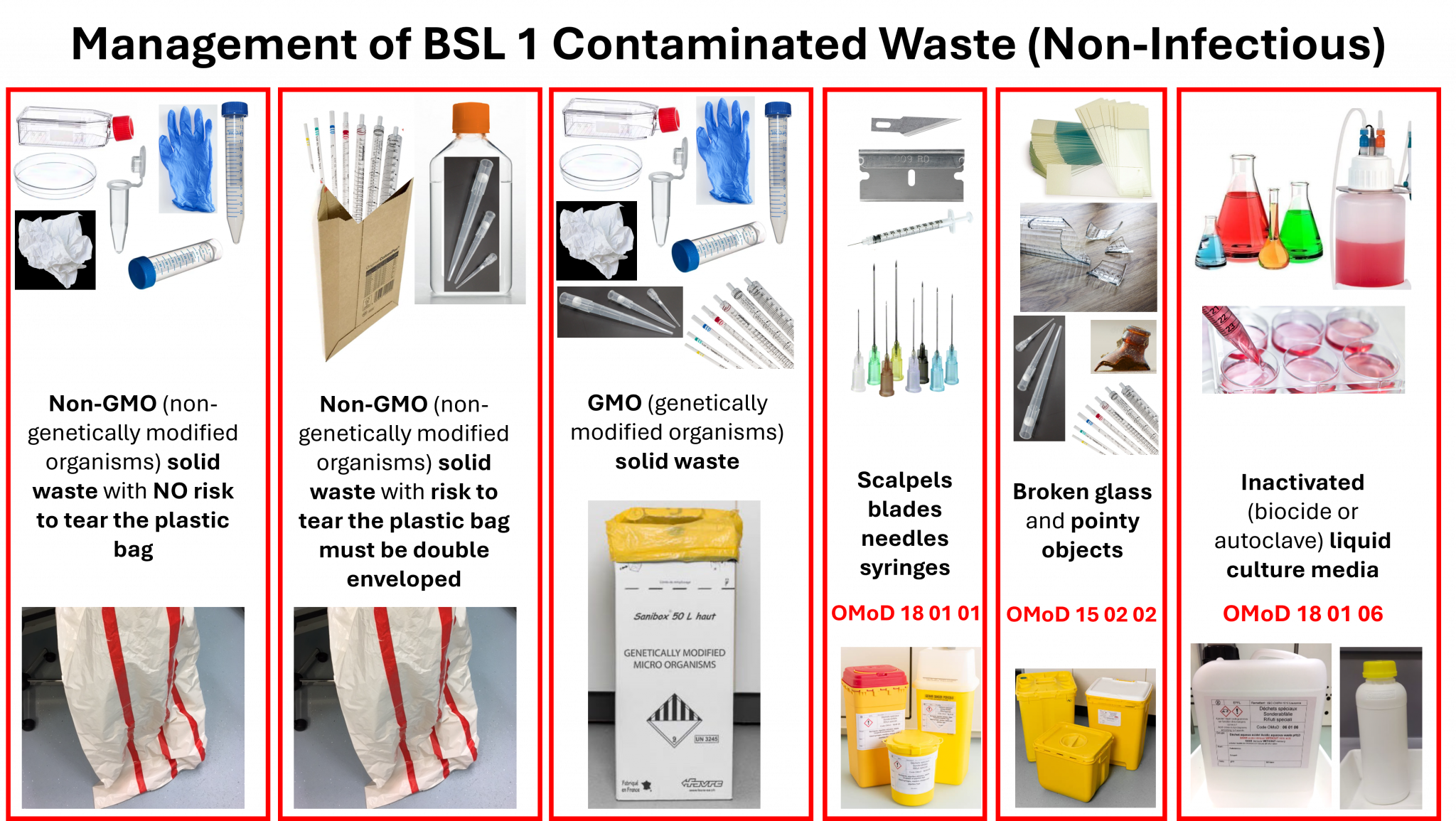
The waste contaminated with biosafety level 1 (BLS 1) organisms has to be separated depending on whether it is solid or liquid, whether it is contaminated with genetically modified organisms (GMO), whether it can rupture the waste plastic bag and whether it is a sharp or a pointy object.
The “management of BSL 1 contaminated waste (not infectious)” chart can be downloaded here.
Liquid waste inactivation: after dilution, Virkon and bleach (sodium hypochlorite – NaOCl) are stable for one week, while Incidin Pro remains effective for two weeks. Additional disinfectant must be added if waste remains in the laboratory for more than 1-2 weeks.
Always separate liquid waste from solid waste.
Solid waste must be collected in red autoclavable plastic bags and inactivated by autoclave treatment on site, or sent directly to an approved disposal company. In the latter case, it must be sealed in appropriate rigid containers: blue boxes for prion-like proteins and yellow boxes for agar dishes.
Serological pipettes, filtered tips, and other sharp or pointed items should not be placed directly into plastic waste bags, as they may puncture them. These items must first be collected or packaged in a rigid container, which can then be placed inside an autoclavable plastic waste bag.
Liquid waste must be inactivated by autoclave or chemical treatment before disposal, unless it contains substances incompatible with these methods, such as radioactive or toxic materials (e.g. arsenic). In such cases, the waste must be sent to a specialized disposal company as a dedicated shipment.
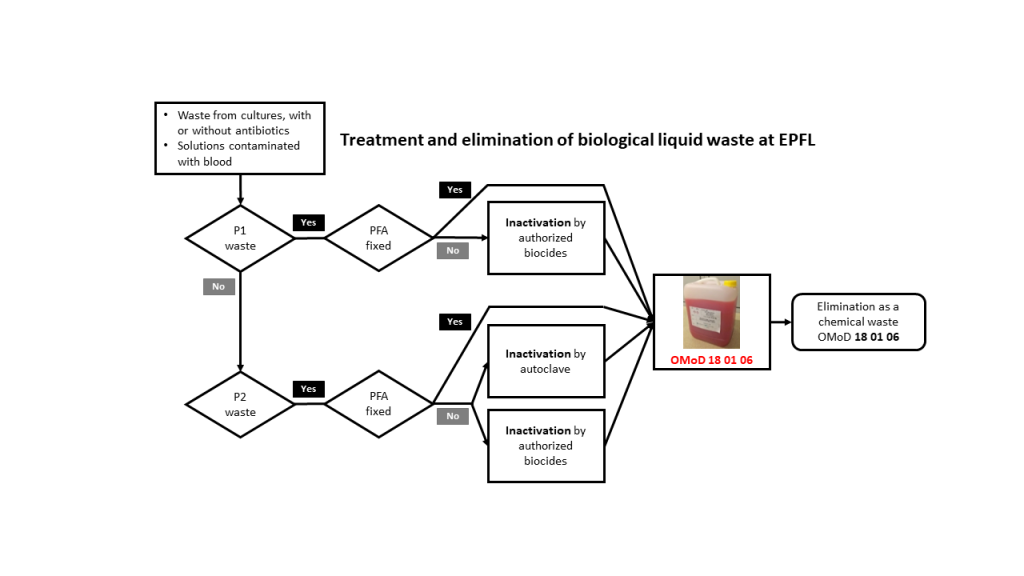
The “Treatment and elimination of biological liquid waste at EPFL” chart can be downloaded here.
Liquid waste inactivation: after dilution, Virkon and bleach (sodium hypochlorite – NaOCl) are stable for one week, while Incidin Pro remains effective for two weeks. Additional disinfectant must be added if waste remains in the laboratory for more than 1-2 weeks.
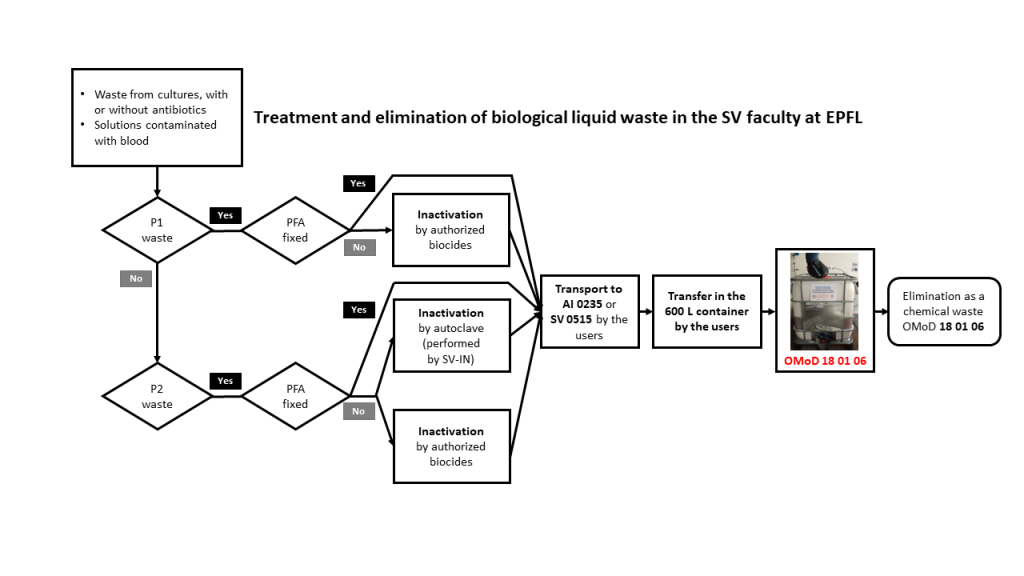
The “Treatment and elimination of biological liquid waste in the SV faculty” chart can be downloaded here.
Liquid waste inactivation: after dilution, Virkon and bleach (sodium hypochlorite – NaOCl) are stable for one week, while Incidin Pro remains effective for two weeks. Additional disinfectant must be added if waste remains in the laboratory for more than 1-2 weeks.
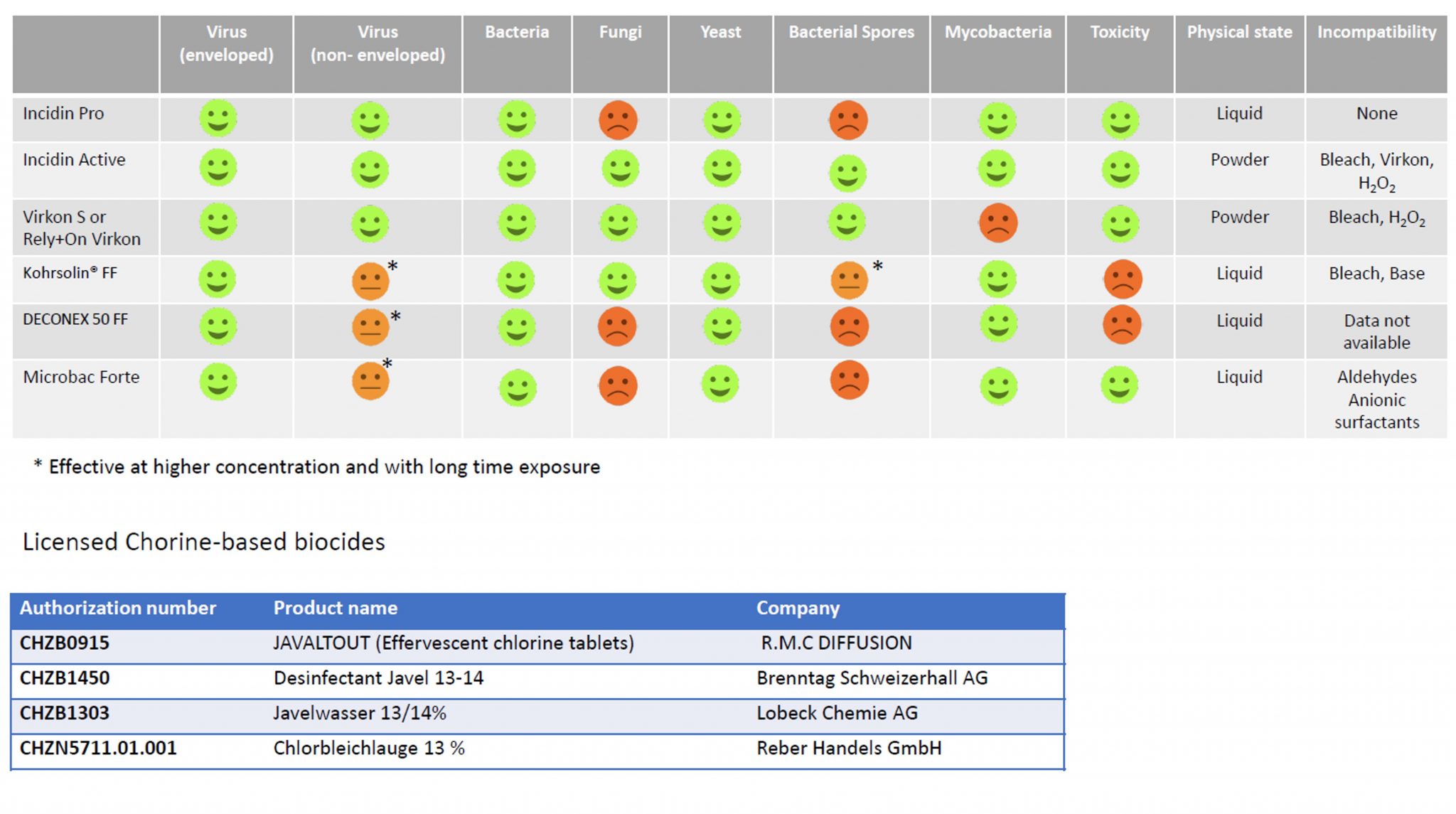
Disinfectants must be carefully selected to meet the specific needs of the laboratory, considering:
- their effectiveness against the target organism to be inactivated
- their compatibility with other substances present in the solution to be treated
- the potential presence of organic matter in the solution to be treated
- their hazardousness, where less hazardous alternatives are available, these should be preferred
- their compatibility with laboratory equipment and materials, particularly in the context of surface decontamination.
According to the Ordinance on Biocidal Products (OPBio, SR 813.12), only biocidal products that are approved, or at least notified for approval, may be used:
Any questions? Contact us.